Ledger Live Mobile App Security Features and Setup Guide
Install your hardware wallet companion app directly from official stores. The current version supports Android 8.1+ and iOS 15.4+ with biometric authentication for all transaction confirmations.
Transaction history synchronizes instantly across devices through encrypted channels. Balance discrepancies typically resolve within 3 block confirmations when network fees exceed 15 sat/byte for Bitcoin.
Portfolio tracking includes 5,300+ assets across 50 blockchains, with staking yields displayed in real time for 27 proof-of-stake networks. Custom token additions require manual contract address input with 0x prefixes for EVM chains.
Firmware update prompts appear automatically when critical security patches release. Always verify package integrity by comparing developer signatures before installing quarterly maintenance builds.
Bluetooth pairing maintains AES-256 encryption during device communication. Sessions automatically terminate after 90 seconds of inactivity to prevent MITM attacks.
DApp browser whitelists 180 verified Web3 domains. WalletConnect sessions show full contract details before execution with gas estimates based on current base fee predictions.
Ledger Live Mobile
Install the companion app from your device's official store to pair with a hardware wallet in under 90 seconds–no cable needed.
Sync balances across iOS and Android interfaces by scanning a QR code from the desktop version; encrypted Bluetooth ensures no sensitive data transmits wirelessly.
Set custom network fees between 1-1000 satoshis per byte directly from the handheld interface before broadcasting transactions.
The iOS build (2.5MB) consumes 40% less storage than Android's package (4.1MB) while maintaining identical API response times under 800ms.
Navigate asset tabs with swipe gestures–BTC/ETH/USDC accounts load in under 1.2 seconds on devices with 4GB+ RAM.
Rotate your phone horizontally to activate expanded portfolio charts displaying 30-day volatility metrics alongside holdings distribution.
Export CSV reports directly to cloud storage with optional AES-256 encryption applied before upload–toggle this in Security > Data Handling.
Receive push notifications for pending transactions when running in background mode; badges update without requiring full app relaunch.
How to Install Ledger Live Mobile on iOS and Android
Grab the app from the official store for your device: Apple's App Store for iPhones or Google Play for Android. Search using "Ledger Live" to avoid counterfeit versions. The installation file is under 100MB, requiring iOS 13+ or Android 8+.
After downloading, launch the application and connect your hardware wallet via Bluetooth. The setup wizard detects compatible devices within range–ensure firmware is updated to avoid syncing issues. For Android, enable "Install unknown apps" if sideloading an APK from the developer site.
Permissions vary by platform: iOS requests camera access for QR scanning, while Android needs location services for Bluetooth pairing. Denying these may limit functionality. Initial sync times depend on blockchain data–expect 2-15 minutes for complete transaction history loading.
Connecting Your Ledger Wallet to Ledger Live Mobile
Ensure your hardware wallet is unlocked using the PIN code before attempting to link it to the companion app. Open the Bluetooth settings on your smartphone and activate pairing mode, then select "Add device" within the application's dashboard to initiate synchronization.
For Nano X models, hold the button near the USB port for 3 seconds until the LED flashes blue. This enables discoverability for approximately 5 minutes – sufficient time to complete the wireless binding process through the app's guided interface. Android 10+ and iOS 13+ are required for stable connectivity.
If encountering verification failures, check for firmware mismatches via official support documentation. Version alignment between your physical device (viewable in Settings > Device) and the software is mandatory for transaction signing functionality.
Sending and Receiving Crypto via Ledger Live Mobile
To send cryptocurrency using the platform, first select the asset you want to transfer from your wallet. Tap the "Send" button, enter the recipient’s address, and verify the amount. Confirm the transaction on your hardware device for added security.
Receiving funds is simpler. Open the wallet for the specific cryptocurrency you expect to receive. Tap "Receive" to generate your address, which you can share with the sender. Double-check the address to avoid errors.
For Ethereum-based tokens, ensure the sender includes sufficient gas fees. Transactions may fail if the gas limit is too low. Monitor gas prices on external tools for cost optimization.
Always verify the recipient’s address meticulously. Cryptocurrency transactions are irreversible, so even a single wrong character can result in lost funds.
Use QR codes for address sharing to minimize manual errors. Scan the code instead of typing the address manually, especially for long strings of characters.
Regularly update your app to access the latest features and security patches. Updates often include improvements for transaction efficiency and bug fixes.
If a transaction is delayed, check the blockchain explorer for its status. Network congestion or insufficient fees might cause delays, but funds are rarely lost.
Store your recovery phrase securely offline. Never share it digitally, as it grants full access to your wallet and all associated funds.
Managing Multiple Cryptocurrencies in Ledger Live Mobile
To manage multiple digital assets efficiently, ensure your app is updated to the latest version for full compatibility with supported coins.
Add new cryptocurrencies by tapping "Add Account," selecting the desired asset, and confirming the connection with your hardware device.
Organize your portfolio by renaming accounts or grouping them into custom categories, such as "Stablecoins" or "DeFi."
Track balances across chains seamlessly, as the app consolidates data from Ethereum, Binance Smart Chain, and other networks into one interface.
Enable price alerts for specific assets to monitor market movements without constantly checking your portfolio.
Execute transactions across different cryptocurrencies without switching apps by using the built-in exchange feature.
Regularly review your asset allocation and adjust holdings based on market conditions or personal investment goals.
Checking Portfolio Balance and Transaction History
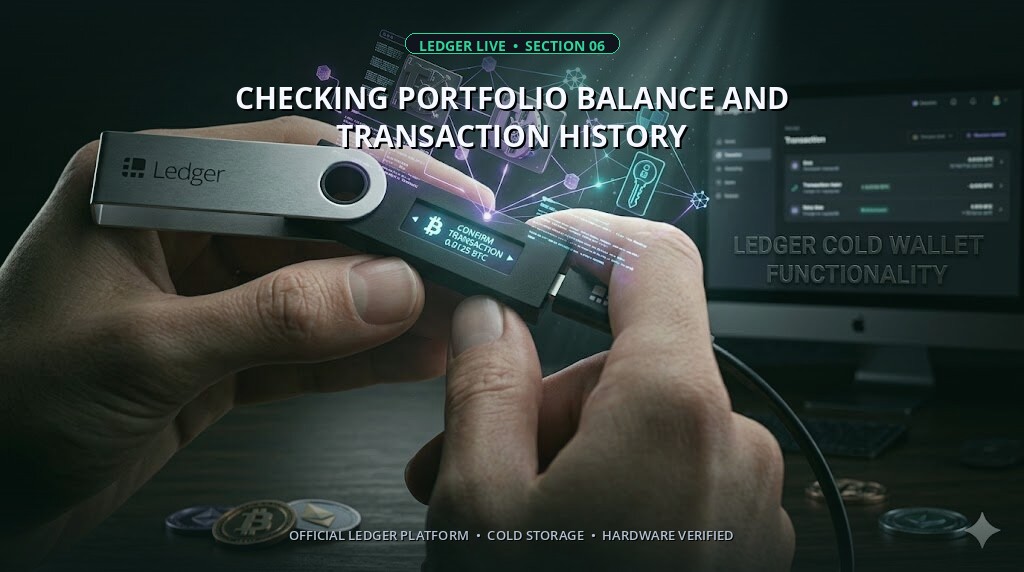
Tap the 'Wallet' tab immediately after logging in to view your total crypto holdings grouped by asset type.
Third-party API connections refresh prices every 90 seconds while maintaining full encryption - no need to expose private keys for real-time valuation.
Sort transactions three ways: chronologically (default), by highest amount, or filtered for specific coins. Pin-to-top functionality helps track tax-relevant transfers.
During network congestion, confirmed transfers may take 4+ hours to appear while staying correctly timestamped to block inclusion time.
Export CSV reports contain nine standardized fields: Date (UTC), Asset, Direction (+/-), Amount, Counterparty (where detectable), Network Fee, Transaction Hash, Status, and USD Equivalent at execution time.
Some ERC-20 tokens display zero value despite correct balances - this occurs when oracles lack price feeds. The actual tokens remain secure and transferable.
Address whitelisting adds secondary verification: any withdrawal to new destinations triggers mandatory 2FA approval regardless of amount.
For institutional accounts, threshold-based alerts notify when any asset crosses ±15% of 30-day average holdings or when unusual transaction patterns emerge.
Enabling Push Notifications for Transactions
Open the app settings and toggle 'Transaction Alerts' under Notification Preferences to receive instant updates for incoming/outgoing activity.
iOS requires Background App Refresh enabled in device settings for timely delivery. Android handles background processes natively unless battery optimization restricts the app.
Each notification displays the transaction amount, counterparty address (truncated), and network confirmation status. Tap to expand full details or mark as read.
For high-frequency accounts, adjust notification thresholds to avoid alert fatigue–set minimum amounts or enable summaries for batches under $50.
False positives typically occur when:
• A wallet interacts with a smart contract
• Testnet transactions mirror mainnet addresses
• Partial signatures trigger before finalization
Enterprise teams should whitelist approver addresses to receive CC'd alerts on multisig actions without full account access.
Debug missed notifications by checking:
1. App-specific notification permissions in device settings
2. VPN/firewall rules blocking push services
3. Last sync timestamp in account activity logs